Between Mediterranean light and the distinctive landscape of the Santa Pola salt flats, family entertainment finds a rhythm of its own. Pola Park brings together childhood fantasy, amusement-park classics, shared challenges and more dynamic thrills in one flexible day out. The visit does not revolve around a single headline ride, but around a sequence of moments: a first turn on the carousel, a kart race, the laughter of the bumper cars, a pause in front of the stage or a glimpse of the salt flats from the roller coaster.
Located in Santa Pola, in the province of Alicante, Pola Park offers up to 25 attractions for visitors with different ages, heights and preferences, alongside live shows, food outlets, game booths and seasonal theming. That mix makes Pola Park a flexible, participatory family experience that can be shaped around each group, allowing visitors to alternate movement, play, rest and entertainment according to their own pace.
The concept is especially effective because it combines several forms of leisure within a single visit. Guests looking for gentle stimulation can choose fantasy-led spaces and attractions designed for younger children; those who prefer shared movement can focus on family rides; and anyone seeking a stronger rush can move towards speed, height or suspense. Taken together, Pola Park places shared time at the centre of the day, framed by Santa Pola and its Mediterranean atmosphere.
Pola Park, a family amusement park in Santa Pola
Pola Park is an amusement park on Avenida Zaragoza, without a street number, in Santa Pola, Alicante. Its identity is built around family leisure, with experiences ranging from introductory games and active-play areas to classic rides, more intense attractions and stage entertainment. The Pola Park venue therefore works as a meeting point for families, groups of friends and visitors from different generations.
Its appeal lies not only in the number of options, but in the freedom to combine them. A family can start with a fantasy ride, continue with a physical activity, come together for an attraction suitable for several ages and leave the strongest sensations to those who meet the relevant access conditions. This kind of route supports an experience adapted to each visitor’s energy, age and personality, rather than imposing one fixed way to enjoy the park.
Family amusement parks are most memorable when everyone can find a place within the day without breaking the group’s momentum. Pola Park responds to that idea through rides with different profiles and spaces that make it possible to alternate action with pauses. Some guests may look for height and speed, while others feel more comfortable with visual, playful or skill-based activities. The result is a plan that accommodates different tastes and levels of intensity, while each attraction continues to apply its own safety restrictions.
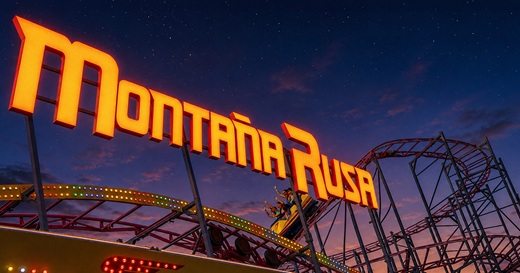
Santa Pola also provides a clear geographical identity. The coastal town, closely associated with the Mediterranean and its salt-flat landscape, places the visit within a wider leisure escape in the province of Alicante. Pola Park is not detached from that setting: the roller coaster offers views towards the Salinas de Santa Pola, linking the ride to the bright, open character of the destination. In this sense, the park and the town strengthen one another as parts of the same family experience.
Pola Park attractions: fantasy, movement and adrenaline
Pola Park offers up to 25 attractions across a broad spectrum of sensations. Some have no minimum height, others include maximum-height limits for younger guests, several allow accompanied access, and more intense experiences require visitors to reach a stated measurement. This variety makes it possible to plan by preference as well as by age: fantasy, coordination, flight, driving, speed and suspense become different languages within the same park.
For younger visitors, the Carrousel preserves the imagery of coaches, cups and fantasy horses, while Seta creates a setting inspired by storybook worlds. The child-sized Noria, Aerolandia and the Tren Aéreo introduce movement on a gentler, highly visual scale. These attractions can provide a first encounter with an amusement park and place imagination and a child’s growing sense of independence ahead of intensity.
Active play has a distinct role too. Trampolines, inflatables, Jumping and the Pista Americana invite children to bounce, climb, slide, cross nets and test their balance. Here, enjoyment comes from direct participation and from repeating a movement until it feels familiar. For especially energetic children and young visitors, the body becomes a central part of the game, always within the height, weight, clothing and operational requirements shown for each facility.
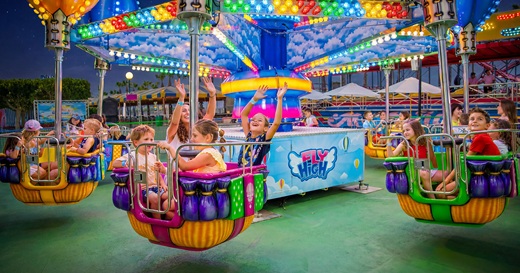
Other attractions encourage a shared experience between companions. Fly High recreates the idea of piloting a balloon; Rodeo draws on the imagery of the American West; battery-powered cars and motorbikes offer adapted driving; and Mini-Golf introduces a precision challenge in a tropical-inspired setting. These options create space for conversation, friendly competition and small celebrations, so the relationship between participants becomes part of the attraction itself.
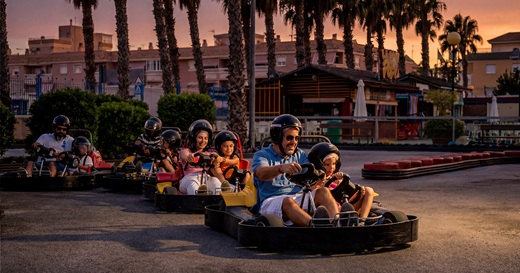
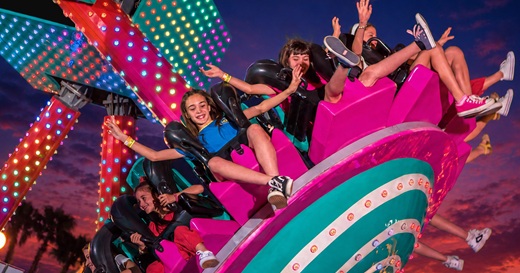
Amusement-park classics remain prominent. Coches de Choque turns every corner into an unpredictable encounter; Karts appeals to the instinct to race; Sillas Voladoras creates a feeling of flight; and the Montaña Rusa combines motion, speed and views towards the salt flats. Caída Libre and Extreme add stronger stimulation for guests seeking more intensity. Together they form a graduated route through adrenaline, capable of building as confidence grows.
Pasaje Maldito introduces a different kind of emotion, one created not only by mechanical movement but by scenery, anticipation and suspense. Casa de la Risa approaches surprise from a lighter angle, while attractions such as Tambores and Barco Pirata make theming central to the ride. Pola Park therefore expands its vocabulary beyond speed and shows that atmosphere can be an attraction in its own right, whether expressed through humour, adventure, mystery or fantasy.
Every choice should be made with the signage and access rules of the individual attraction in mind. Some rides require a minimum height; others admit children when accompanied; several apply maximum-height or weight limits; and certain experiences include age recommendations. Reviewing these conditions before joining a queue helps prevent last-minute changes and supports a safe, realistic route suited to every member of the group.
What a visit to Pola Park feels like
The experience begins with a simple decision: which sensation should come first. Some groups follow the sounds and colours of the children’s attractions, while others immediately orient themselves towards a visible landmark such as the roller coaster, flying chairs or drop ride. That first choice establishes a mood without determining the whole visit. At Pola Park, the level of intensity can change throughout the day, moving between thrill, play, live entertainment and rest.
Amusement parks create a distinctive relationship with time. A wait can become a conversation; a short ride may later occupy a large place in the memory; and an attraction repeated twice can become the ritual of the day. Pola Park supports this dynamic because it gathers many different experiences in one venue. The visit develops as a collection of shared scenes, rather than a race to complete a fixed number of activities.
The visual and soundscape also shapes the mood. Music from the shows, the colours of the installations, the continuous movement of the rides and the reactions of other visitors create an atmosphere in which something is always happening. For children, this stimulation feeds curiosity; for adults, it accompanies the pleasure of participating, observing and reconnecting with familiar amusement-park traditions. That overlap creates an emotion recognisable across generations.
Flexibility becomes essential when a group includes people with very different preferences. Pola Park allows those who enjoy suspense and speed to find their challenges, while others choose mini-golf, skill games, live shows or gentler children’s attractions. Meeting again afterwards to compare reactions is part of the day. In this way, everyone can feel together without having to do exactly the same thing, an important quality for families and larger groups.
Light and season can change the way the park is perceived. A daytime session foregrounds detail, views and movement; an afternoon or evening opening can add illumination, softer temperatures and a different stage energy. Operating hours vary across the calendar, so the current schedule should always be checked. This variation allows Pola Park to develop different atmospheres while preserving its family identity.
Live shows, characters and themed seasons at Pola Park
The rides form the core of the park, but live shows introduce another rhythm. Choreography, music, characters and short narratives create a place for visitors to gather in front of the stage and rest from constant movement without leaving the sense of occasion behind. Rather than acting as a minor addition, the programme contributes a collective dimension in which the audience watches, sings, dances and reacts together.
Popi and friends appear within Pola Park’s entertainment world, connecting songs, dance and storytelling with the child-friendly imagination of the venue. Recognisable characters help younger guests follow the action and can turn a scheduled performance into an emotional encounter. For the wider family, these moments become a bridge between mechanical attractions and participatory live entertainment, expressed through an accessible, celebratory language.
The programme can change with the season, and that renewal is part of the park’s personality. Carnival heightens colour, music and costume play; Easter Celebration introduces a spring atmosphere; Halloween explores the balance between fright and humour; and Christmas reshapes the setting through lights, songs and festive imagery. These periods offer different reasons to return and rediscover the venue, even when many familiar rides remain in place.
Themed seasons also reorganise the narrative of the visit. Decoration changes how spaces are perceived, shows adopt the codes of each celebration and visitors arrive with different expectations. A child visiting during Halloween does not experience precisely the same mood as one arriving at Christmas or during the summer programme. This capacity for transformation makes the calendar part of Pola Park’s creative experience.
Stage times can serve as reference points for organising the day. A family might plan several rides before a performance, use the show as a pause and then return to the attractions with renewed energy. This gives the visit enough structure to feel comfortable without turning it into a rigid timetable. The balance between freedom and scheduling creates a more manageable rhythm for groups with children.
Because show titles, content, locations and times may vary, planning should always rely on the information available for the chosen day. The same applies to seasonal environments and any element that depends on current programming. Checking ahead does not remove spontaneity; it protects priority moments and supports an informed visit that makes better use of the live entertainment.
Food, breaks and game booths at Pola Park
A full amusement-park visit needs pauses that preserve the group’s energy and good mood. Pola Park has several food outlets with fast meals, snacks, drinks, ice creams, slush drinks, sweets and other options designed for a break between activities. Beyond their practical purpose, these stops create moments of conversation that structure and extend the enjoyment, especially when children of different ages are visiting together.
Names such as Chicholandia, Fausti Burger, La Cocina de Popi, Popi Burger, Candyland and the ice-cream areas identify different food profiles around the park. Some are suited to a fuller meal, while others work as a brief stop or a refreshing treat. Availability may depend on daily operations, but the wider principle remains clear: food forms part of the route rather than simply interrupting it.
Game booths add a form of participation based on skill. Fishing for ducks, aiming at the hippo game or testing accuracy with darts shifts the focus from mechanical movement to an individual challenge. These are brief activities that are easy for the group to watch and support, turning a single attempt into a shared scene. Here, the possibility of a prize mixes with coordination, concentration and collective celebration.
It is sensible to distinguish between experiences covered by the chosen access option and games, services or supplements that may have their own conditions. Information around the park and signage at each point can clarify those differences. Adding this check to the plan avoids assumptions and makes it easier to reserve time for genuine priorities, preserving clear organisation without losing spontaneity.
Breaks also serve an emotional purpose. Stopping at the right moment can prevent tiredness from defining the rest of the visit, while a cold drink or an ice cream may become part of the day’s memory. In a setting of constant stimulation, pausing restores attention and enthusiasm. For that reason, the best route is not always the one with the most rides, but the one that protects the group’s energy.
Santa Pola and the Mediterranean setting
Pola Park is in Santa Pola, a coastal municipality in the province of Alicante, on Avenida Zaragoza, without a street number. This location makes it possible to include the park in a day out or a wider break on the Alicante coast, while connecting it naturally with nearby areas such as Alicante, Elche and Torrevieja. The Pola Park venue in Santa Pola therefore holds a clearly identifiable place within family leisure on the Costa Blanca.
The Salinas de Santa Pola provide a distinctive visual reference. From the roller coaster, the park highlights views towards this landscape, briefly connecting the thrill of the ride with the surrounding territory. That relationship prevents the experience from feeling interchangeable with any other destination and strengthens an identity rooted in Santa Pola, its light and its horizon.
For visitors spending several days in the area, the park can complement time at the beach, a coastal walk or a slower period of rest. The experiences do not need to compete: the amusement park introduces movement, narrative and participation, while the surrounding destination offers different rhythms. Together they create a Mediterranean break with alternatives for different moments of the day and the trip.
Road access is available from Alicante and Torrevieja via the N-332 and from Elche via the CV-865. Visitors can also travel by bus to Santa Pola and complete the final part of the route to the park, while those arriving by rail can organise onward connections from Elche or Alicante. In every case, planning the journey before departure reduces uncertainty and protects leisure time.
Geography even shapes the way the experience is described. Pola Park is more than a sequence of installations: it is a plan associated with a specific town and a recognisable Mediterranean landscape. Naming Santa Pola, the salt flats and the province of Alicante clarifies both what the park offers and where it happens. That precision makes the relationship between destination, venue and experience central to its identity.
How to plan a family visit to Pola Park
The first step is to check the calendar and operating hours for the intended day, as opening times and programming can vary by season. It is also useful to review whether a themed period, live shows or operational changes are scheduled. This information helps determine arrival time and priorities, creating a flexible plan based on current details rather than on general expectations.
Height, age, accompaniment and weight restrictions deserve attention before the visit, particularly when children are part of the group. Preparing a short selection of suitable attractions for each person can prevent disappointment and make it easier for adults to take turns where necessary. The aim is not to create a closed checklist, but to establish a mental map of safe, realistic options that can be adapted during the day.
A practical approach is to identify two or three priority experiences for each visitor and leave the rest open to curiosity. Someone seeking stronger sensations might select Montaña Rusa, Extreme or Caída Libre; a guest who prefers gentler activities could focus on the Carrousel, Mini-Golf or live shows; and younger children can choose from attractions suited to their height. This gives each person something of their own within a shared itinerary.
Personal equipment matters too. Comfortable footwear, clothing appropriate to the season and a simple way of managing belongings make movement easier. Some jumping facilities require socks, and for safety reasons mobile phones, cameras and selfie sticks must not be used on rides. Following these guidelines supports a more comfortable and responsible experience for visitors and park operations alike.
Weather conditions or maintenance requirements can temporarily affect certain rides and facilities. Keeping alternatives in mind is therefore useful: a show, a game booth, a food break or an attraction with a different profile can preserve the day’s momentum when the original plan changes. Adaptability helps maintain a positive visit even when operations require adjustments.
Families, organised groups and school visits may have different needs in relation to timing, meeting points and supervision. Agreeing where to regroup, who is accompanying each child and what to do if someone becomes separated adds reassurance. Pola Park is a highly stimulating environment, and simple coordination allows group awareness to coexist with the freedom to explore.
Why Pola Park stands out as a shared day out
Pola Park’s central value lies in the coexistence of different experiences. Visitors do not need to seek the same intensity in order to enjoy the day together: some love suspense, others prefer fantasy, several are drawn to precision games, and many enjoy watching the reactions of the people around them. This variety supports a form of family leisure that recognises different ways of having fun.
The combination of rides, live shows, food, game booths and themed seasons broadens the story of the visit. Each element serves a different purpose and prevents the day from depending on one kind of stimulation. When the pace is balanced, excitement does not disappear; it changes form. Pola Park becomes a modular experience that can move from adrenaline to rest and from watching to participating.
Personal milestones matter as well. For a child, reaching the required height for a ride for the first time can feel like a rite of passage; for a family, returning to the carousel or bumper cars may become a tradition; for friends, a photograph before or after a challenge can summarise the whole day. These details reveal the emotional dimension that turns leisure into memory.
Santa Pola’s Mediterranean identity gives those memories a setting. The light, the nearby coast and the reference of the salt flats place the experience in a specific destination, while the park contributes its own language of colour, music and movement. Together they make Pola Park recognisable both for what it offers and for the place in which it happens.
Ultimately, the value of the visit is not measured only by the number of rides completed. It lives in the anticipation before boarding, the laughter during the circuit, the conversation over a break and the story the group continues to tell afterwards. Between attractions, stages and the horizons of Santa Pola, Pola Park creates a space where enjoyment is shared and memories take on a form of their own.
Useful info about Pola Park
What is Pola Park and what kind of experience does it offer?
Pola Park is a family amusement park in Santa Pola, Alicante. Its offering combines up to 25 attractions with different levels of intensity, live shows, food outlets, game booths and themed environments across the operating calendar.
What is a visit to Pola Park like?
A visit can alternate children’s attractions, family rides, skill challenges, stronger thrills, live entertainment and breaks. Each group can organise its own route according to the ages, heights, preferences and energy levels of its members.
Where does the Pola Park experience take place?
It takes place at the Pola Park venue on Avenida Zaragoza, without a street number, 03130 Santa Pola, Alicante.
Does Pola Park have attractions for different ages?
Yes. The park includes experiences with no minimum height, children’s attractions with maximum-height limits, rides that allow accompanied access and attractions with stated minimum-height requirements. Visitors should check the signage and specific conditions before joining each attraction.
How do you get to Pola Park?
By road, the park can be reached from Alicante or Torrevieja via the N-332 and from Elche via the CV-865. Visitors can also take a bus to Santa Pola and complete the journey to the park, while rail travellers can arrange onward connections from Elche or Alicante.
What should visitors check before going to Pola Park?
Visitors should review the calendar, operating hours, live-show programme, themed seasons and any height, age, accompaniment or weight restrictions. The operation of some facilities may change because of maintenance, weather conditions or other circumstances.
Where can official tickets for Pola Park be purchased?
Official tickets can be purchased through entradas.com on the dedicated Pola Park page, where current availability, ticket types and applicable conditions are displayed.